When to Redesign Your Website (and When Not To)
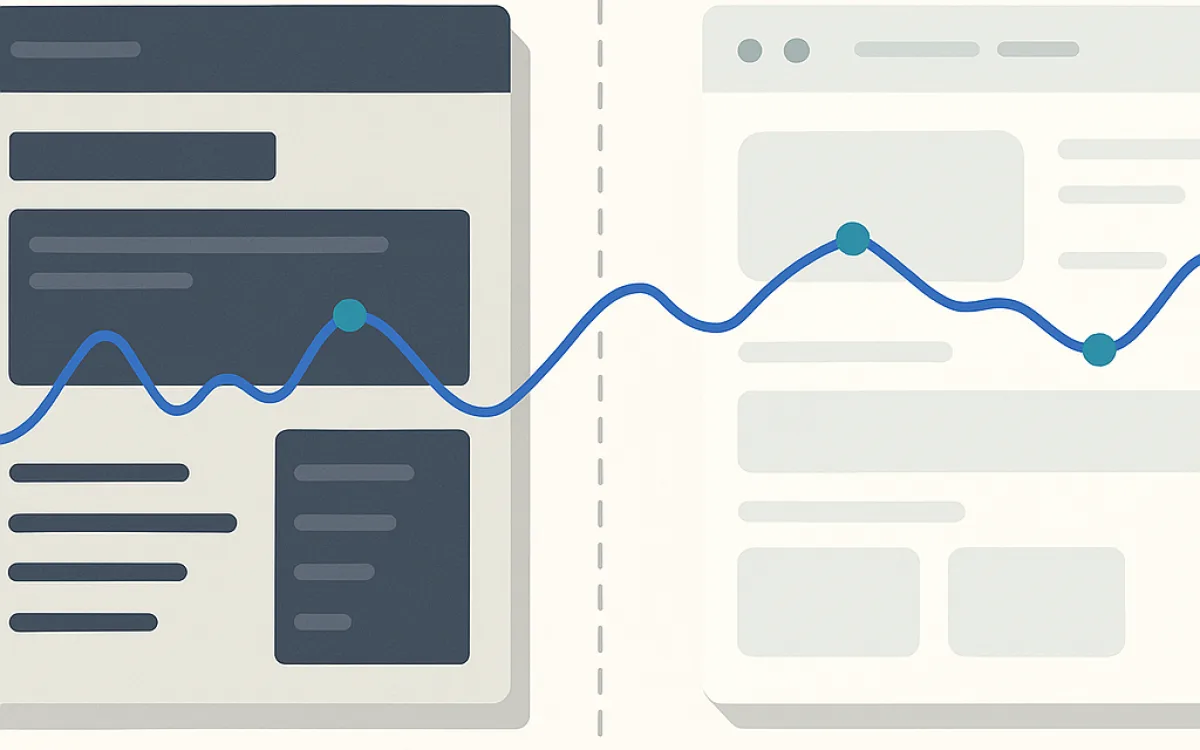
Redesigns are frequently launched for the wrong reason — the site looks dated to the people who see it every day — and they carry real risk: a full rebuild resets accumulated search signals, discards conversion knowledge, and often replaces a known problem with an unknown one.
This guide covers what genuinely justifies a redesign, what does not, and the incremental route that produces better results on most sites.
Reasons that justify a redesign#
These are structural problems that cannot be fixed by changing pages, which is what makes them redesign reasons rather than improvement reasons.
- The platform is end of life or no longer receives security updates.
- The site is not responsive and cannot be made so without a rebuild.
- The structure no longer matches the business — you sell something the information architecture cannot express.
- Editing is impossible without a developer, so content is stale by default.
- Performance is structurally poor because of how it was built, not because of a few large images.
- Accessibility failures are in the components themselves and cannot be patched.
- A merger or rebrand changes the name, not only the colours.
Notice what is not on this list: "it looks dated". That is usually a styling project, and styling projects are a fraction of the cost and carry almost none of the risk.
Reasons that do not#
Each of these has a cheaper, lower-risk fix that addresses the actual problem.
| Stated reason | Actual problem | Cheaper fix |
|---|---|---|
| "It looks dated" | Visual style | Restyle: typography, colour, spacing |
| "Traffic is falling" | Content or technical issue | Diagnose first — a redesign usually makes it worse |
| "Conversions are low" | Specific pages or a form | Test changes to those pages |
| "A competitor relaunched" | Nothing measurable | Not a reason |
| "New marketing director" | Ownership, not the website | Review the data together first |
| "It is three years old" | Age is not a defect | Fix what is measurably wrong |
Why full redesigns often lose traffic#
A full redesign changes structure, content, URLs and templates simultaneously. If performance drops, you cannot tell which change caused it — and if it improves, you cannot tell either.
- URL changes lose accumulated signals unless every redirect is mapped correctly.
- Content rewritten "to be more concise" frequently removes the exact text that was ranking.
- New templates can drop internal links, structured data or metadata that the old ones had.
- Design changes can reduce conversion in ways that only show up weeks later.
- Everything changes at once, so attribution afterwards is guesswork.
If a redesign is genuinely necessary, keep the URL structure and the ranking content wherever you can. Change the appearance and the code, not the addresses.
The incremental alternative#
For most sites, a series of targeted changes outperforms a rebuild — it is cheaper, it is measurable, and each step can be reversed.
- Measure first: analytics, Core Web Vitals, Search Console, and a handful of user sessions.
- Fix performance and accessibility on the existing templates. These usually pay for themselves.
- Rewrite the pages that get traffic but do not convert, one at a time.
- Restyle: typography, colour, spacing. This addresses "looks dated" for a fraction of the cost.
- Replace individual templates one by one, keeping their URLs.
- Improve the editing experience so content stops going stale.
- Re-measure after each step, so you know which change did what.
Frequently asked questions
How often should a website be redesigned?
There is no correct interval. A well-maintained site that is improved incrementally can run for many years without a rebuild. The trigger should be a structural problem you cannot fix within the current build, not a date on a calendar. Sites redesigned every three years by policy usually lose ground each time.
Will a redesign improve my SEO?
Not by itself, and it can easily hurt. What helps is what a redesign sometimes includes: faster pages, better structure, better content. Those improvements can be made without a redesign, with less risk. If search performance is the goal, diagnose the actual cause before committing to a rebuild.
Should I keep my URLs in a redesign?
Wherever you possibly can. Keeping URLs removes the single largest risk in a relaunch. If they must change — a genuinely broken structure, or a domain change — map every old URL to a specific new one with a 301 and keep those redirects indefinitely.
How long does a redesign take?
Similar to a new build, and often longer because of migration: two to five months for a mid-sized site. It is rarely cheaper than starting fresh once content migration, URL mapping and matching existing behaviour are counted, which surprises most people who expect a discount for having a site already.
website redesignwhen to redesign a websitewebsite refreshwebsite relaunchredesign seoincremental redesign